
Dyne Lab

Applications

Wherever a surface has to accept ink, coating or adhesive, it has to be tested first. Here’s where dyne testing fits into each process.

Most plastic films leave the extruder with a surface energy too low to bond with anything. Corona or flame treatment raises it — but treatment decays over time, varies across the web, and can be undone by additive migration or handling. Dyne testing is the check between treatment and the process that depends on it.

22-70 dynes/cm

Markers & liquids

Our Applications

Detailed insights into where Dyne testing is critical across various industrial processes.

Flexible packaging & film extrusion

THE PROBLEM Surface energy can drop after treatment, making films harder to print, coat or bond.
WHERE TESTING FITS Test at the treater, on incoming rolls, and before production to confirm the surface is ready.

Recommended Products

Quick Test 38 for polyolefin films

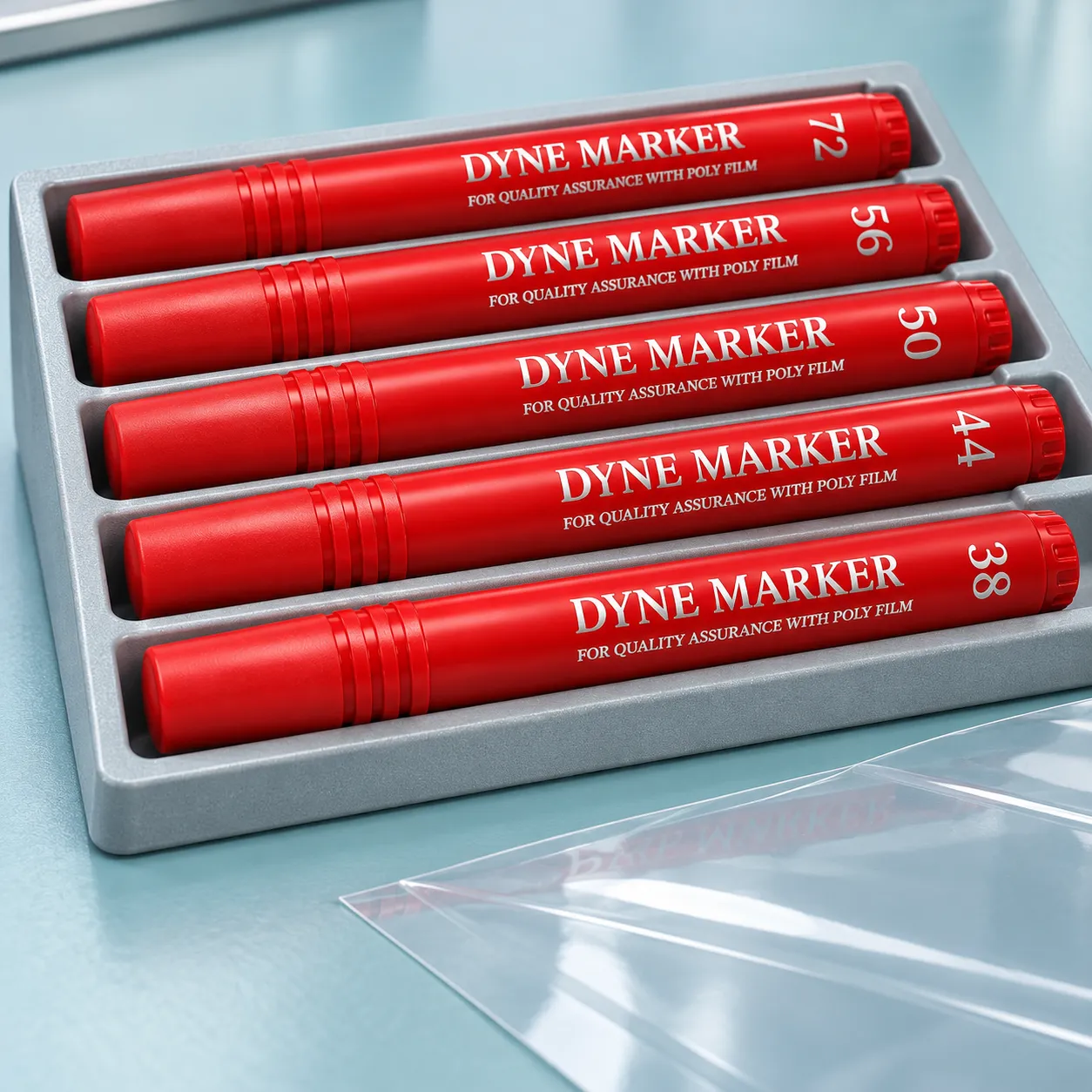
  • Dyne Markers for exact readings

Printing

THE PROBLEM Low surface energy can cause poor ink adhesion, scuffing and print failure.

WHERE TESTING FITS
Check each roll before printing to catch surface issues before they become rejected runs.

Recommended Products

Quick Test 38 for polyolefin

  • Quick Test 48 for PET
  • Dyne Markers for precise readings

Lamination

THE PROBLEM
Bond failure that shows up days or weeks after the laminate leaves the plant — delamination, tunnelling, edge lift. By then the product is already with the customer.

WHERE TESTING FITS
On both webs, before lamination. Both surfaces have to be right, and the second one is the one people forget.

Products

Dyne Markers or Dyne Solutions across 30–70 dynes/cm

Coating

THE PROBLEM
Coating that pulls back, fisheyes, or leaves uncoated pinholes. The coating is behaving exactly as the surface energy tells it to.

WHERE TESTING FITS
Before coating, and after any change to line speed, treater power or substrate batch.

Products

Dyne Solutions for documented lab measurement • Dyne Markers for line-side checks

Converting & adhesive bonding

THE PROBLEM
Tapes, labels and adhesives that don’t hold on plastic parts or films — particularly on polyolefins, which have naturally low surface energy before treatment.

WHERE TESTING FITS
On incoming components, and as part of first-article inspection.

Products

Quick Test for pass/fail • Dyne Markers for the reading

Textiles & garment production

THE PROBLEM
Marking that has to be visible during cutting and stitching, then gone before the piece is finished.

WHERE TESTING FITS
Cutting, pattern placement, sampling, and QC marking on the line.

Products

Erasable Fabric Marker

Low surface energy materials

THE PROBLEM
Silicone, PTFE and release-coated substrates sit below the standard testing range entirely. Standard dyne sets can’t measure them — they’ll bead at every level, which tells you nothing useful.

WHERE TESTING FITS
R&D, material qualification, incoming inspection of release liners.

Products

Special Dyne Solutions, 22–30 dynes/cm

Notes on Test Conditions

To empower manufacturers and converters with quick, accurate, and reliable surface energy testing solutions — helping them achieve consistent adhesion, reduce waste, and deliver superior packaging quality across every process.

Not sure where testing fits in your process?

Describe your line and we’ll tell you where to test, and with what.